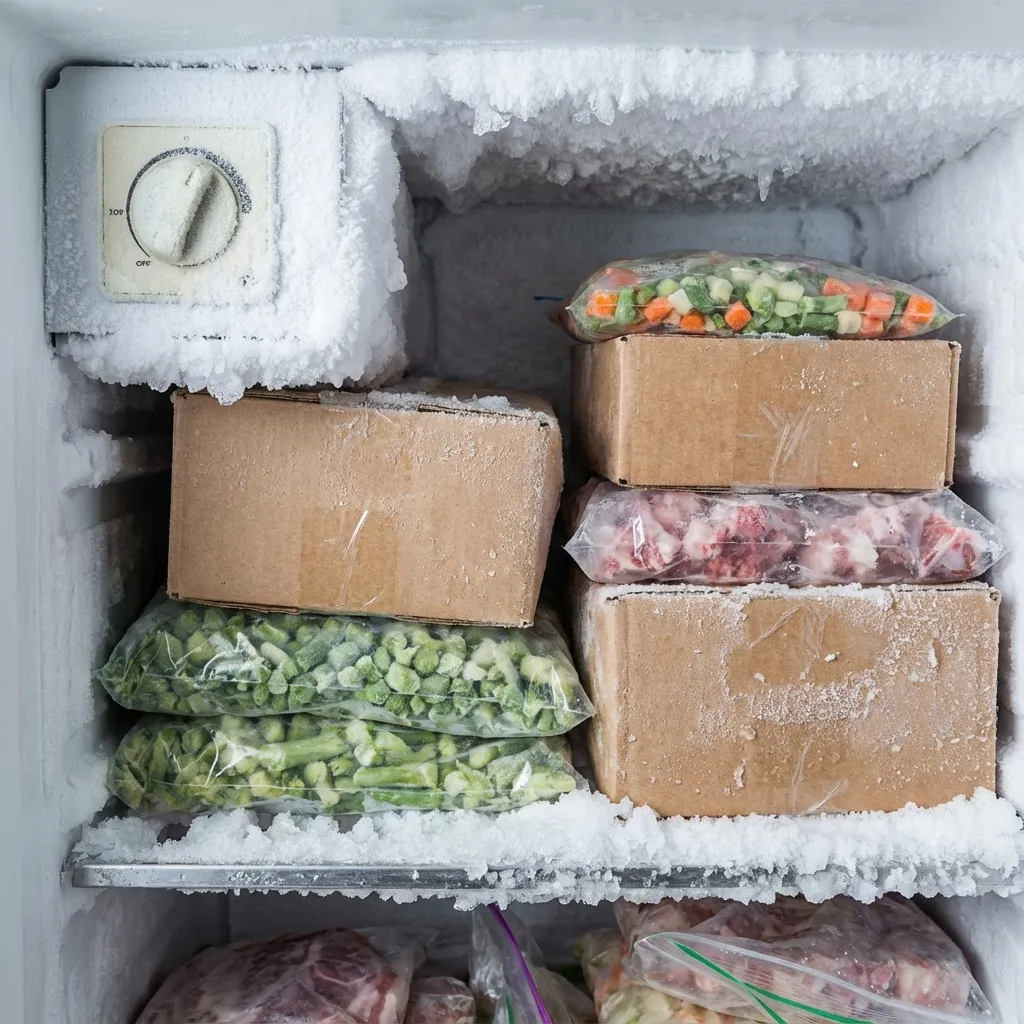
You open your freezer and find soft ice cream, frost-covered vegetables, and meat that is starting to thaw. A freezer that is not maintaining freezing temperature is an urgent problem — food safety is at risk, and every hour the temperature stays above 0 degrees Fahrenheit reduces the shelf life of everything inside.
This guide covers every common reason your freezer is not freezing, provides step-by-step fixes you can safely handle, and tells you when to call a professional.
Quick Answer: If your freezer is not freezing, the most common causes are dirty condenser coils, a blocked or failed evaporator fan, a defrost system failure causing ice buildup, or a failed compressor. Start by cleaning the condenser coils and checking that the evaporator fan is running. If the compressor is running but the freezer is warm, you likely have a sealed system or airflow issue.
Why Your Freezer Is Not Freezing: The Most Common Causes
1. Dirty Condenser Coils
The condenser coils release heat from the refrigerant as it circulates through the cooling system. When these coils are covered in dust and pet hair, they cannot release heat efficiently, which forces the compressor to work harder and run continuously without achieving the target temperature.
This is the most common and easiest-to-fix cause of a warm freezer. Clean the condenser coils — located either on the back of the unit or underneath behind a kickplate — using a coil cleaning brush or a vacuum with a brush attachment. Clean coils can reduce freezer temperature by 5 to 10 degrees and significantly improve compressor efficiency.
2. Evaporator Fan Failure
The evaporator fan circulates cold air from the freezer coil into the freezer compartment. In refrigerator-freezer combinations, this fan also pushes cold air into the refrigerator section. If the fan motor fails, the freezer may start to warm up because cold air is not being distributed from the coil.
You can usually hear the evaporator fan running when you open the freezer door — it produces a steady humming sound. If you do not hear the fan or notice that one side of the freezer is colder than the other, the fan motor may need replacement. Evaporator fan motors are one of the most reliable fixes you can make.
3. Defrost System Failure
The defrost system melts frost off the evaporator coil on a regular cycle. When the defrost system fails — whether due to a bad defrost timer, a failed defrost heater, or a defective defrost thermostat — frost accumulates on the coil and eventually blocks airflow entirely. The compressor runs continuously but the freezer gets warmer because air cannot circulate past the ice-covered coil.
If you see frost building up on the back wall of the freezer (in a refrigerator-freezer combo) or on the evaporator cover (in a standalone freezer), a defrost system failure is the likely cause. You can temporarily restore cooling by unplugging the unit, removing the freezer contents, and allowing the ice to melt completely — but the problem will return until the failed component is replaced.
4. Door Seal Leak
The door seal (gasket) creates an airtight barrier that keeps warm, humid air out of the freezer. If the gasket is torn, warped, or not making full contact with the cabinet, warm air enters continuously, causing frost buildup and preventing the freezer from maintaining temperature.
Test the seal by closing the freezer door on a dollar bill. Pull the bill out slowly — you should feel resistance all the way around. If the bill slides out easily in any section, the seal is not making contact. Repeat this test at several points around the door.
5. Overloaded or Underloaded Freezer
Freezers work best when they are about 70 to 85 percent full. The frozen items inside act as a thermal mass that helps maintain temperature during door openings and compressor cycles. A freezer that is nearly empty has to work harder to maintain temperature, and the frequent cycling can cause temperature fluctuations.
On the other hand, an overloaded freezer blocks the vents that circulate cold air, preventing even cooling. If bags are packed against the back wall or blocking the evaporator fan, rearrange items to allow airflow.
6. Compressor Start Relay Failure
The start relay is a small device attached to the side of the compressor that provides the initial boost of current needed to start the compressor motor. When the start relay fails, the compressor may hum for a few seconds and then click off, or it may not start at all.
If you hear a humming sound from the bottom of the freezer followed by a click, the start relay may have failed. The relay is inexpensive (typically $15 to $40) and can be replaced by a technician without replacing the entire compressor.
7. Compressor Failure
The compressor is the heart of the cooling system. When it fails, the freezer will not cool at all. Compressor failures are the most expensive repair on a freezer and typically cost $500 to $800 including labour. On freezers over 10 years old, compressor failure usually means it is time to replace the unit.
Signs of a failed compressor include no humming or running sound, the compressor being hot to the touch but not running, or the compressor cycling on and off rapidly.
8. Refrigerant Leak
A refrigerant leak reduces the amount of coolant circulating through the system, which decreases cooling capacity. Small leaks cause gradual warming over weeks or months. Large leaks cause sudden warming.
Refrigerant leaks require professional repair. The leak must be located, sealed, and the system must be recharged with the correct type and amount of refrigerant. This repair involves specialized equipment and should not be attempted by homeowners.
Step-by-Step: How to Fix a Freezer That Is Not Freezing
Step 1: Check the Temperature Setting
Verify that the thermostat is set to 0 degrees Fahrenheit (-18 degrees Celsius). If it was accidentally turned down, adjust it and allow 24 hours for the freezer to reach the target temperature.
Step 2: Clean the Condenser Coils
Unplug the freezer and locate the condenser coils. On upright freezers, they are usually on the back. On chest freezers, they are often on the underside. Use a coil cleaning brush or a vacuum with a brush attachment to remove all dust and debris. Allow the freezer to run for 24 hours and check the temperature.
Step 3: Check the Door Seal
Close the door on a dollar bill at several points around the perimeter. The bill should resist being pulled out. If it slides out easily in any area, the gasket needs to be cleaned, realigned, or replaced. Clean the gasket with warm soapy water and dry it. If cleaning does not restore the seal, replace the gasket.
Step 4: Check for Frost Buildup
Open the freezer and look for frost on the back wall (refrigerator-freezer combos) or on the evaporator cover. If frost is present, the defrost system has failed. Unplug the unit and allow all frost to melt completely — this can take several hours. Once the frost is gone, plug the unit back in and it will cool normally until the frost builds up again. Schedule a service call to replace the failed defrost component.
Step 5: Listen for the Evaporator Fan
With the freezer door open and the unit running, listen for the sound of the evaporator fan. It should produce a steady humming. If you do not hear the fan, or if it makes a grinding or squealing noise, the fan motor needs replacement.
Step 6: Listen for the Compressor
Put your hand on the compressor (it is the black, football-sized component at the bottom back of the freezer). It should be warm and vibrating gently if it is running. If it is hot but not vibrating, or if you hear a rapid clicking sound, the start relay or compressor may have failed.
Step 7: Check for Overloading
Ensure that no items are blocking the air vents inside the freezer. Leave space between items for air circulation. A freezer that is too full or too empty will not maintain temperature efficiently.
When to Call a Professional
Contact a technician if you discover any of the following:
- The compressor is running but the freezer is warm — indicates a sealed system issue (refrigerant leak or compressor valve failure)
- Rapid clicking from the compressor area — the start relay has failed or the compressor is struggling
- Frost returns after defrosting — the defrost system needs component replacement
- Food has been above 40 degrees Fahrenheit for more than 2 hours — the food should be discarded and the freezer needs immediate repair
Appliance Service Plus provides emergency freezer repair across Toronto, Brampton, Vaughan, and the GTA. Their technicians carry common replacement parts and can usually complete freezer repairs in a single visit.
Frequently Asked Questions
How cold should my freezer be?
Your freezer should maintain a temperature of 0 degrees Fahrenheit (-18 degrees Celsius) or below. At this temperature, food stays safe indefinitely, though quality gradually decreases over time. If the temperature rises above 0 degrees, check the thermostat setting, clean the condenser coils, and verify the door seal.
Can I put food back in the freezer after it has partially thawed?
If food still contains ice crystals and feels cold to the touch (below 40 degrees Fahrenheit), it can be safely refrozen. However, the texture and quality may be affected. If food has been above 40 degrees for more than 2 hours, it should be discarded.
How much does freezer repair cost in Toronto?
Common freezer repairs in the Toronto area range from $100 to $350 for component failures like fan motors, thermostats, and start relays. Compressor replacement costs $500 to $800, which may not be worth it on older freezers. Defrost system repairs typically cost $200 to $300.
Why is my freezer cold but not freezing?
If the freezer is cold (around 32 to 40 degrees) but not freezing (0 degrees), the most common causes are dirty condenser coils, a failing compressor that cannot reach the target temperature, or a partially blocked defrost drain that is keeping the evaporator coil iced over. Clean the coils first and check for frost buildup on the back wall.
Need Professional Help?
If the problem persists or seems too complex to handle on your own, our expert technicians are ready to help. Fast, reliable service when you need it.