You preheat your oven to bake dinner, and thirty minutes later the interior is still cold. An oven that will not heat is a serious disruption — it puts dinner plans on hold and can make you question whether the appliance is worth repairing or if it is time for a replacement.
This guide walks you through every common reason your oven is not heating, provides step-by-step instructions for the fixes you can safely handle, and tells you when to call a professional.
Quick Answer: If your oven is not heating, the most common causes on electric models are a burnt bake element, a blown thermal fuse, or a failed oven control board. On gas models, the leading cause is a faulty igniter that will not open the gas valve. Start by visually inspecting the heating element or igniter, then test components with a multimeter.
Why Your Oven Is Not Heating: The Most Common Causes
1. Burnt or Broken Bake Element (Electric Ovens)
The bake element is the coil at the bottom of the oven that glows orange when heating. When this element develops a break or burn spot, it stops conducting electricity and produces no heat. This is the single most common cause of an electric oven that will not heat.
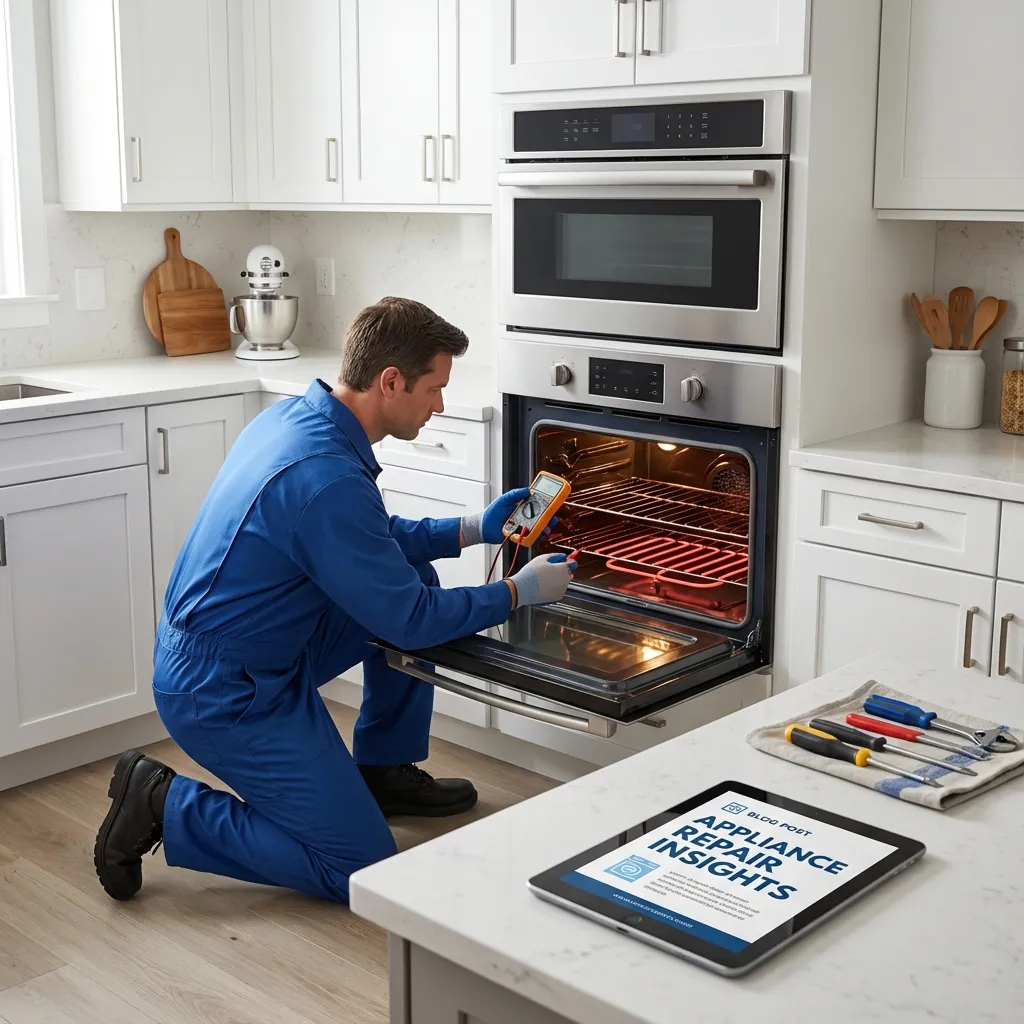
You can often see the damage — a visible crack, blister, or charred spot on the element. If the element looks intact, test it with a multimeter set to the resistance setting. A healthy element shows continuity and a resistance reading within the range specified by the manufacturer. An open circuit means the element has failed.
2. Faulty Igniter (Gas Ovens)
Gas ovens use a hot-surface igniter to open the gas valve and light the burner. The igniter must draw enough current — typically 2.5 to 3.2 amps depending on the model — to open the safety valve. When the igniter weakens with age, it may glow orange but fail to draw sufficient current, so the gas valve never opens and the oven never heats.
This is the most common cause of a gas oven that will not reach temperature. The igniter may also click repeatedly without lighting, or it may glow continuously without the burner igniting. An igniter that glows for more than 90 seconds without the burner lighting is almost certainly faulty and needs replacement.
3. Blown Thermal Fuse
Many ovens have a thermal fuse — a small, one-time safety device that cuts power to the oven if it overheats. If the fuse blows, the oven will not heat at all. The thermal fuse is usually located on the back of the oven, behind the rear panel.
Test the fuse with a multimeter. No continuity means it has blown. Always identify the cause of the overheating before replacing the fuse — if the vent was blocked or a thermostat failed, the new fuse will blow as well.
4. Failed Oven Control Board
The control board manages all oven functions, including sending power to the heating element or gas valve. If the board fails, the oven may not heat, may display error codes, or may heat to the wrong temperature.
Control board failures can result from power surges, moisture damage, or age-related component degradation. Diagnosing a board failure requires testing outputs with a multimeter to confirm whether voltage is being sent to the element or igniter during a heat cycle.
5. Faulty Temperature Sensor
Modern ovens use a temperature sensor — a probe that extends into the oven cavity — to monitor the cooking temperature. If the sensor is out of calibration or has failed, the control board may not turn on the heating element, or the oven may heat to the wrong temperature.
Test the sensor with a multimeter at room temperature. Most oven sensors should read approximately 1,000 to 1,100 ohms at 70 degrees Fahrenheit. A significantly different reading indicates a faulty sensor.
6. Broken Broil Element
Most electric ovens have two heating elements: the bake element at the bottom and the broil element at the top. During a preheat cycle, both elements typically activate. If the broil element is broken, the oven may still heat somewhat but will take much longer to reach the set temperature and may not heat evenly.
Visually inspect the broil element for cracks or burn marks. Test it with a multimeter the same way you would test the bake element.
7. Gas Valve Failure (Gas Ovens)
The gas valve is a safety device that opens to allow gas to flow to the burner only when the igniter confirms proper ignition. If the gas valve fails, it may not open even when the igniter is working correctly. Gas valve failures are less common than igniter failures but do occur, particularly in older ovens.
Testing a gas valve requires measuring the current draw of the igniter during a heat cycle. If the igniter draws the correct current but the valve does not open, the valve is likely faulty. Because gas valves involve gas lines, this repair should always be performed by a licensed technician.
Step-by-Step: How to Fix an Oven That Will Not Heat
Step 1: Check the Power Supply
For electric ovens, verify that the oven is receiving 240 volts at the terminal block. A tripped breaker or a blown house fuse can cut power to the heating elements while leaving the oven display and controls working (they run on 120 volts). Check your breaker panel and flip both breakers fully off, then back on.
For gas ovens, verify that the gas supply valve behind the oven is open and that the oven is plugged in (the igniter and control board need electricity).
Step 2: Inspect the Heating Element or Igniter
For electric ovens, remove any racks and visually inspect the bake element at the bottom of the oven. Look for cracks, blisters, or charred spots. If you see visible damage, the element needs replacement. If it looks intact, test it with a multimeter for continuity.
For gas ovens, observe the igniter during a heat cycle. If it glows for more than 90 seconds without the burner igniting, the igniter is weak and needs replacement. If it does not glow at all, test it with a multimeter for continuity.
Step 3: Test the Thermal Fuse
Unplug the oven and remove the rear panel to access the thermal fuse. Remove the wires from the fuse terminals and test with a multimeter for continuity. No continuity means the fuse has blown. Replace it and investigate the root cause of the overheating.
Step 4: Test the Temperature Sensor
Locate the temperature sensor probe inside the oven cavity — it is usually at the back wall. Disconnect the sensor wires and test resistance with a multimeter. At room temperature, a healthy sensor reads approximately 1,000 to 1,100 ohms. Replace the sensor if the reading is significantly off.
Step 5: Check the Control Board
If the element or igniter and all safety components test good, but the oven still will not heat, the control board may be at fault. Inspect the board for visible signs of damage — burnt spots, bulging capacitors, or corroded connections. Testing the board requires checking for 240 volts at the element terminals during a bake cycle. If the board is not sending power, it needs repair or replacement.
Step 6: Run a Test Bake
After making any repairs, set the oven to 350 degrees Fahrenheit and allow it to preheat fully. Use an oven thermometer to verify that the actual temperature matches the set temperature. Allow 15 to 20 minutes for the oven to stabilize before checking.
When to Call a Professional
If you have worked through the steps above and your oven still will not heat, or if you discover a gas valve issue or a control board failure, it is time to call a professional technician. Gas oven repairs in particular should always be handled by a licensed professional due to the safety risks involved with gas lines.
Appliance Service Plus has been serving Toronto homeowners with reliable oven repair for years. Their technicians carry commonly needed parts for Samsung, LG, Whirlpool, GE, and other major brands, which means many repairs are completed in a single visit. If you are located in Toronto, Etobicoke, Scarborough, or anywhere in the GTA, you can schedule a service call without the long wait times.
How to Prevent Future Oven Heating Problems
Avoid Using the Oven for Storage
Storing pots, pans, or baking sheets in the oven is common, but forgetting to remove them before preheating can block airflow and cause the oven to overheat, potentially blowing the thermal fuse.
Clean Spills Promptly
Food spills that bake onto the oven floor can damage the bake element over time. Wipe up spills after the oven cools and use the self-cleaning function only when necessary — it heats the oven to extreme temperatures that can stress components.
Use Oven Thermometers
An inexpensive oven thermometer helps you verify that your oven is heating to the correct temperature. If you notice the oven running consistently hot or cold, the temperature sensor may need recalibration or replacement.
Do Not Slam the Oven Door
Repeated slamming can damage the door switch, which tells the oven whether the door is closed. If the switch fails, the oven may not heat because it thinks the door is open.
Inspect Elements Periodically
Check the bake and broil elements for signs of wear — surface cracks, discoloration, or uneven glowing spots. Replacing a weakening element before it fails completely prevents dinner-time surprises.
Frequently Asked Questions
Why is my electric oven not heating but the stove works?
Electric ovens and stovetops use separate circuits. The oven runs on 240 volts through two breakers, while the stovetop uses those same circuits for its elements. If one of the two breakers trips, the stovetop may still work on the remaining circuit, but the oven — which needs both circuits for the bake element — will not heat. Check your breaker panel first.
How much does it cost to replace an oven igniter in Toronto?
An oven igniter typically costs $40 to $90 for the part, depending on the brand. With professional installation, total repair cost is usually $150 to $250 in the Toronto area. Igniter replacement is one of the most common gas oven repairs and is typically completed in under an hour.
Can I still use the stovetop if the oven is not heating?
Yes. The stovetop operates independently from the oven on most ranges. You can use the stovetop normally while the oven is being diagnosed or repaired. Just be careful not to accidentally turn on the oven control while it is malfunctioning.
Why does my gas oven click but not light?
A gas oven that clicks repeatedly without lighting usually has a weak igniter. The igniter may glow orange but not draw enough current to open the gas valve. This is a common failure that gets progressively worse over time — eventually, the oven will not heat at all. Replace the igniter to restore proper function.
How long should an oven take to preheat?
Most ovens take 10 to 15 minutes to reach 350 degrees Fahrenheit. Convection ovens may preheat slightly faster. If your oven takes significantly longer than 15 minutes, or if it never reaches the set temperature, it likely has a failing heating element, a weak igniter, or a faulty temperature sensor.
Get Your Oven Heating Again
An oven that will not heat brings meal preparation to a full stop, but most heating failures are caused by components that are straightforward to diagnose and affordable to replace. Start with visual inspections and multimeter tests, and work through the steps in this guide.
If you need professional help, Appliance Service Plus is here for homeowners across Toronto, Etobicoke, Scarborough, and the GTA. Their technicians diagnose and repair oven heating problems on all major brands — often in a single visit.
Need Professional Help?
If the problem persists or seems too complex to handle on your own, our expert technicians are ready to help. Fast, reliable service when you need it.