
Your appliance breaks down and you face the question that every homeowner dreads: is it worth repairing, or should I replace it? The answer depends on the type of appliance, its age, the cost of repair, and a few practical factors that are easy to overlook in the moment.
This guide gives you a clear framework for making the repair-versus-replace decision, with specific benchmarks for every major household appliance.
Quick Answer: Use the 50% rule — if the repair cost is less than 50% of the cost of a replacement and the appliance is within its expected lifespan, repair it. If the repair exceeds 50% of replacement cost or the appliance is past its expected lifespan, replace it. For refrigerators and washers, repair is almost always the better choice if the appliance is under 8 years old.
The 50% Rule: Your Decision Framework
The simplest way to decide whether to repair or replace is the 50% rule:
- If the repair cost is less than 50% of the cost of a new appliance and the appliance is within its expected lifespan, repair it.
- If the repair cost exceeds 50% of the replacement cost or the appliance is past its expected lifespan, replace it.
This rule works because appliances, like cars, have a tipping point where continued repairs become uneconomical. Below 50%, you are getting good value from the repair. Above 50%, you are spending too much on an appliance that is likely to have additional problems soon.
Appliance Lifespan Benchmarks
Before applying the 50% rule, you need to know whether your appliance is within its expected lifespan. Here are the average lifespans for major household appliances:
| Appliance | Average Lifespan | |-----------|-----------------| | Refrigerator | 10 to 14 years | | Washing machine | 8 to 12 years | | Dryer | 10 to 13 years | | Dishwasher | 8 to 12 years | | Oven / range | 13 to 15 years | | Microwave | 7 to 10 years | | Freezer | 12 to 20 years |
If your appliance is well within its lifespan, repair almost always makes sense — unless the repair cost is unusually high relative to replacement. If your appliance is at or past its lifespan, replacement is usually the better investment.
Common Repair Costs in Toronto
Knowing typical repair costs helps you apply the 50% rule. Here is what Toronto homeowners can expect to pay for the most common appliance repairs:
Refrigerator
- Compressor replacement: $500 to $800 (often not worth it on fridges over 10 years)
- Evaporator fan motor: $200 to $300
- Condenser fan motor: $175 to $250
- Ice maker assembly: $250 to $400
- Thermostat or temperature sensor: $150 to $250
- Door seal / gasket: $150 to $200
Washing Machine
- Drain pump: $150 to $250
- Lid switch: $100 to $175
- Drive belt: $100 to $175
- Motor coupling: $100 to $200
- Water inlet valve: $125 to $200
- Control board: $250 to $400
Dryer
- Heating element (electric): $175 to $275
- Thermal fuse: $100 to $150
- Gas valve coils: $125 to $200
- Drive belt: $100 to $175
- Drum roller: $150 to $250
Dishwasher
- Drain pump: $175 to $275
- Water inlet valve: $150 to $225
- Circulation pump: $250 to $400
- Door latch: $100 to $175
- Control board: $250 to $400
Oven / Range
- Bake element: $150 to $250
- Igniter (gas): $150 to $250
- Control board: $250 to $400
- Surface element (electric): $125 to $200
- Gas valve: $200 to $350
When Repair Makes Sense
Repair is almost always the right choice when:
- The appliance is under 8 years old. Most appliances under 8 years have years of useful life remaining, and a single component failure does not mean the whole unit is failing.
- The repair cost is under 50% of replacement value. A $200 drain pump repair on a $1,200 dishwasher is excellent value.
- The appliance is a premium brand. High-end appliances from brands like Sub-Zero, Miele, and Viking are designed to last longer and perform better than entry-level replacements. They are almost always worth repairing.
- You have extended warranty coverage. If a warranty covers the repair, the decision is simple — get it fixed.
- The failure is a single, known component. A failed lid switch, a broken heating element, a clogged drain pump — these are isolated failures, not signs of systemic decline.
When Replacement Makes Sense
Replace the appliance when:
- The appliance is over 10 years old and the repair is expensive. An 11-year-old refrigerator that needs a $600 compressor is not worth repairing. The compressor is under extreme stress on an older unit, and other components will likely fail soon.
- The appliance has had multiple recent repairs. Three repairs in two years is a clear sign that the appliance is in systemic decline. Cut your losses and replace it.
- Energy efficiency improvements will offset the cost. Newer refrigerators, dishwashers, and washers use significantly less energy and water than models from 10-plus years ago. The savings on utility bills can help justify replacement.
- Replacement parts are unavailable. If the manufacturer no longer makes parts for your appliance, repair may not be an option. This is common for appliances over 15 years old from brands that have been discontinued.
- You are renovating or want to upgrade. If your kitchen or laundry room is being renovated anyway, the cost of a new appliance is easier to justify, and you can choose a model that fits the new space and your current needs.
Factors Beyond Cost
Availability of Parts
Some brands and models have better parts availability than others. Major brands like Whirlpool, GE, Samsung, LG, and Maytag have extensive parts networks, which makes repair faster and less expensive. Lesser-known or discontinued brands may have limited parts availability, which can make even simple repairs costly or impossible.
Your Time Without the Appliance
Consider how long you can go without the appliance. A refrigerator needs immediate repair or replacement. A dishwasher or laundry appliance can wait a few days for a repair, but the inconvenience factor still matters. Repair is typically faster than replacement because you do not need to shop, arrange delivery, and install a new unit.
Environmental Impact
Repairing an appliance is almost always more environmentally friendly than replacing it. Manufacturing a new refrigerator, for example, generates significant carbon emissions and the old unit must be properly recycled. Every repair extends the useful life of an existing product and reduces waste.
A Quick Decision Matrix
| Situation | Recommendation | |-----------|---------------| | Appliance under 8 years, repair under 50% of replacement | Repair | | Appliance under 8 years, repair over 50% of replacement | Consider replacement, especially if other components are aging | | Appliance 8 to 12 years, minor repair under $200 | Repair | | Appliance 8 to 12 years, major repair over $400 | Replace | | Appliance over 12 years | Replace (with rare exceptions for premium brands) | | Multiple repairs in last 2 years | Replace | | Compressor failure on fridge over 10 years | Replace | | Premium brand (Sub-Zero, Miele, Viking) under 15 years | Repair |
Frequently Asked Questions
Is it worth repairing a 10-year-old refrigerator?
In most cases, yes — if the repair cost is under 50% of replacement value and the compressor is still working. Refrigerators typically last 10 to 14 years, so a 10-year-old fridge still has a few years of expected life. Common repairs like fan motors, thermostats, and ice makers are well worth fixing. A compressor failure on a 10-year-old fridge, however, usually makes replacement the better choice.
What is the most expensive appliance repair?
Compressor replacement on a refrigerator is the single most expensive common repair, typically costing $500 to $800 in the Toronto area. Control board replacements across all appliance types are also costly, ranging from $250 to $500. On the other end, simple repairs like thermal fuses, lid switches, and drain pumps are relatively affordable at $100 to $250.
Should I repair or replace a washing machine that is leaking?
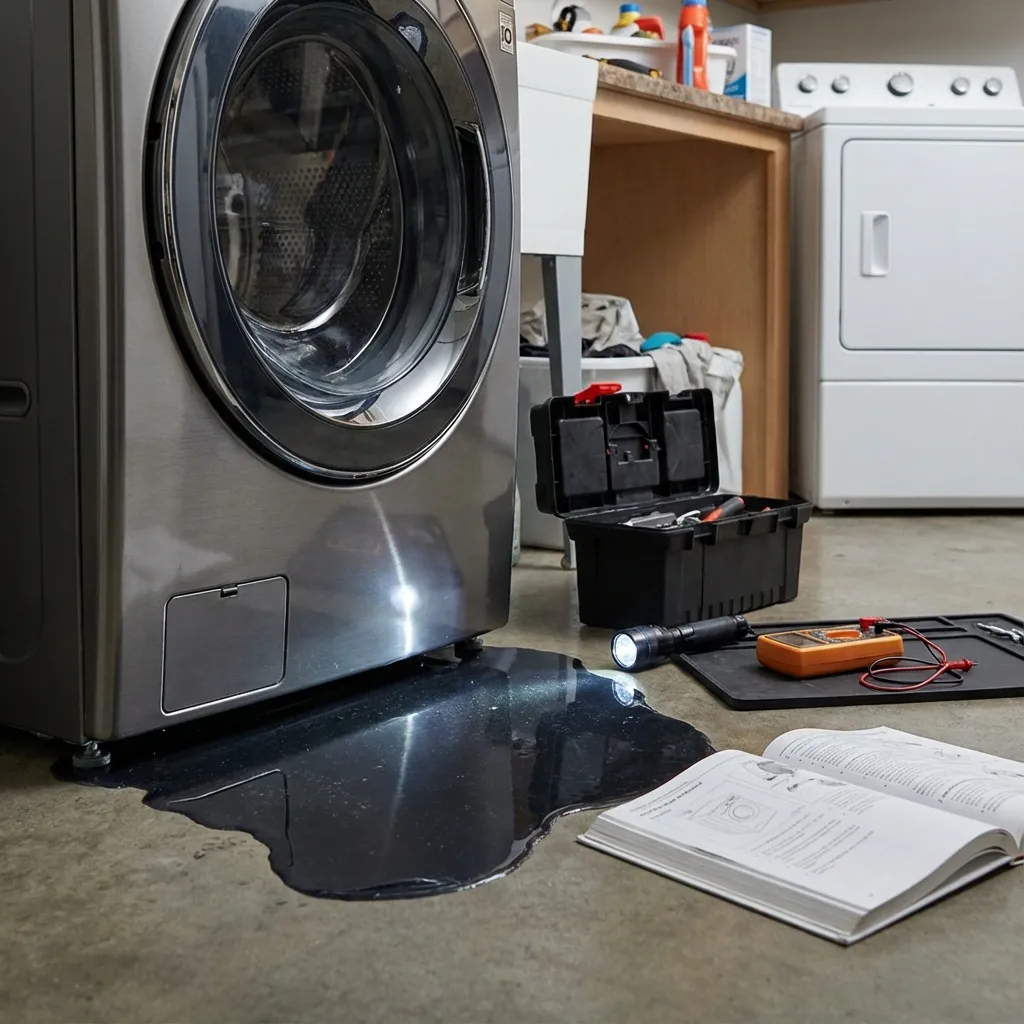
It depends on the source of the leak. If the leak is from a hose connection, drain pump, or door seal, the repair is typically $125 to $250 and well worth doing. If the leak is from the tub itself (a crack in the inner drum), replacement is usually the better choice, as tub repairs are expensive and not always reliable.
How much does a service call cost in Toronto?
Most appliance repair companies in the Toronto area charge $80 to $150 for a service call, which typically includes the diagnosis. Many companies waive the service call fee if you proceed with the repair. Appliance Service Plus offers transparent pricing with no hidden fees — the technician provides a clear quote before beginning any work.
Are newer appliances worth the upgrade for energy savings?
It depends on the age of your current appliance. A new Energy Star refrigerator uses about 30% less energy than a model from 15 years ago. For washers and dishwashers, water savings are also significant. If your appliance is over 12 years old, replacement with an efficient model can reduce your utility bills by $50 to $100 per year, which helps offset the purchase cost over time.
Making the Right Call
The repair-or-replace decision does not have to be stressful. Apply the 50% rule, consider the age of the appliance, and weigh the practical factors. In most cases, repairs under $300 on appliances under 8 years old are the smart choice — they extend the life of your appliance at a fraction of replacement cost.
If you need help diagnosing the problem and getting an honest repair quote, Appliance Service Plus serves Toronto, North York, Mississauga, and the GTA with transparent pricing and same-day service availability. Their technicians provide a clear diagnosis and upfront estimate so you can make an informed decision.
Need Professional Help?
If the problem persists or seems too complex to handle on your own, our expert technicians are ready to help. Fast, reliable service when you need it.