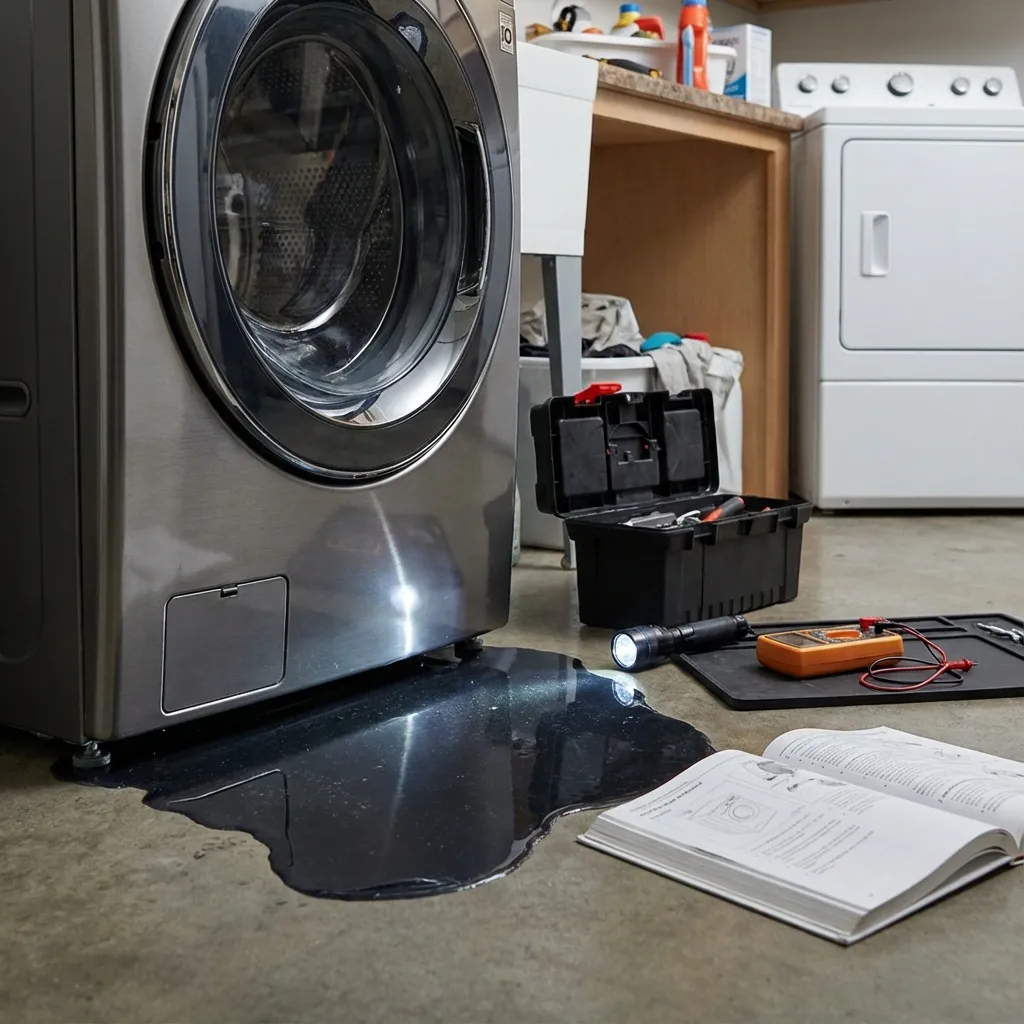
You walk into your laundry room and find a puddle on the floor. A washing machine that leaks is not just inconvenient — it can cause water damage to flooring, cabinets, and the ceiling below if your laundry is on an upper floor. The good news is that most washer leaks come from a small number of sources, and many can be fixed without a service call.
This guide helps you identify where the leak is coming from, provides step-by-step instructions for the fixes you can safely handle, and tells you when to call a professional.
Quick Answer: If your washer is leaking, the most common causes are loose or damaged drain hoses, a worn door boot seal (front-load washers), a clogged or failed drain pump, or an overflowing dispenser drawer. Start by locating where the water is coming from — front, back, or bottom — and trace it to the source.
Identify the Leak Location
The first step is to determine where the water is coming from. This narrows the list of possible causes significantly.
- Leaking from the back: Usually a fill hose connection, drain hose, or water inlet valve
- Leaking from the front: Usually a door boot seal (front-load washers) or a dispenser drawer overflow
- Leaking from the bottom: Usually a drain pump, tub seal, or internal hose
- Leaking during fill only: Usually a fill hose or water inlet valve
- Leaking during drain or spin only: Usually a drain hose or drain pump
Common Causes of Washer Leaks
1. Loose or Damaged Fill Hoses
The fill hoses connect your home's water supply to the washer. These hoses are under constant water pressure, and if they are loose, cracked, or aged, they can leak at the connection points or along the hose itself.
Pull the washer away from the wall and inspect both the hot and cold fill hoses. Check that the connections at both the washer and the wall are tight. Look for cracks, bulges, or corrosion on the hoses. If the rubber washers inside the connections are deteriorated, replace them. If the hoses are more than 5 years old, consider replacing them with braided stainless steel hoses, which are far more durable than rubber.
2. Drain Hose Problems
The drain hose carries waste water from the washer to your home's drain. Common drain hose problems include loose connections, cracks in the hose, and a hose that is not properly secured in the drain pipe.
Check that the drain hose is inserted at least 4 inches into the drain pipe or standpipe and that it is secured with a clamp. If water is backing up out of the drain pipe during the drain cycle, the standpipe may be partially clogged — this is a plumbing issue, not a washer problem.
3. Worn Door Boot Seal (Front-Load Washers)
The door boot seal is the large rubber gasket that creates a watertight seal between the door and the drum on front-load washers. Over time, this seal can develop tears, holes, or mould growth that prevent it from sealing properly. Even a small tear can cause a significant leak during the wash cycle.
Inspect the seal by running your fingers along the inside of the fold, looking and feeling for tears, cracks, or holes. Also check for foreign objects — coins, hair pins, and zip ties commonly get lodged in the seal and cause tears. If the seal is damaged, it needs to be replaced. Boot seal replacement on front-load washers is a common repair that typically costs $200 to $350 including parts and labour.
4. Clogged or Overflowing Dispenser Drawer
The dispenser drawer holds detergent, fabric softener, and bleach. If the drawer is clogged with detergent residue, water can overflow from the drawer and run down the front of the washer.
Remove the dispenser drawer and wash it thoroughly in warm soapy water. Use an old toothbrush to scrub the compartments, especially the fabric softener section. Check the housing inside the washer for clogged rinse ports and clean them with a cloth.
5. Drain Pump Leak
The drain pump moves water out of the washer at the end of each cycle. If the pump housing is cracked, the seal is worn, or a hose connection on the pump is loose, water will leak from the bottom of the machine during the drain cycle.
Drain pump leaks are one of the most common causes of bottom leaks. Inspect the area around the pump for dripping or moisture. If the pump is cracked or the seal is worn, the pump needs replacement.
6. Tub Seal or Bearing Leak (Top-Load Washers)
On top-load washers, the tub seal sits between the wash basket and the outer tub, preventing water from leaking down the centre post. When this seal fails — often due to age or exposure to harsh detergents — water leaks from the bottom of the washer during the wash cycle.
A failing tub seal often causes visible rust on the top of the transmission (the metal component visible from underneath the washer). If you see rust or water stains on the transmission, the tub seal is leaking and needs to be replaced. This is a significant repair that involves removing the wash basket and transmission.
7. Internal Hose Leak
Washers have several internal hoses that carry water between the valve, dispenser, tub, and pump. These hoses can crack, come loose from their connections, or develop holes at wear points.
To check internal hoses, you will need to remove the washer's front panel or cabinet. Inspect each hose for cracks, loose connections, and wear marks. Clamp-type connections can sometimes be tightened, while cracked hoses must be replaced.
Step-by-Step: How to Fix a Leaking Washer
Step 1: Locate the Leak
Run the washer through a short cycle with a few towels inside. Watch closely for where the water appears. Use a flashlight to check under and behind the machine. Note whether the leak happens during fill, wash, drain, or spin — this tells you which components are under pressure at the time of the leak.
Step 2: Check the Fill Hoses
Pull the washer away from the wall. Inspect both fill hoses from the wall connection to the washer connection. Tighten any loose connections with pliers. Replace deteriorated rubber washers. If the hoses are cracked or more than 5 years old, replace them with braided stainless steel hoses.
Step 3: Check the Drain Hose
Verify that the drain hose is securely inserted into the drain pipe or standpipe. The hose should extend at least 4 inches into the pipe but not so far that it sits in the water trap. Ensure the hose is not kinked or cracked.
Step 4: Inspect the Door Seal (Front-Load Washers)
Feel along the inside fold of the rubber door boot seal for tears, holes, or foreign objects. Clean any mould or residue with a vinegar solution. If the seal is torn or heavily deteriorated, it needs replacement.
Step 5: Clean the Dispenser Drawer
Remove the dispenser drawer and wash it thoroughly. Scrub all compartments with a brush and warm soapy water. Check the housing inside the washer for clogged ports and clean them.
Step 6: Inspect the Drain Pump
If the leak is coming from the bottom front of the machine, check the drain pump area. On front-load washers, you can often access the drain pump filter through a small panel at the front base. Open the filter and check for debris. If the pump housing is cracked, the pump needs replacement.
Step 7: Check for Internal Hose Leaks
If the leak persists and you cannot identify the source from the outside, you may need to remove the washer's front panel to inspect the internal hoses. Look for moisture along each hose and at every connection point. Tighten loose clamps and replace any cracked hoses.
When to Call a Professional
Contact a technician if you discover any of the following:
- A tub seal or bearing leak on a top-load washer — this requires removing the wash basket and transmission
- A cracked outer tub — on most washers, the outer tub is not serviceable and must be replaced
- Water damage to flooring or cabinetry — the leak may be more extensive than it appears
- The leak source is unclear — a professional technician can pressurize the system and identify the exact leak point
Appliance Service Plus provides washer leak diagnosis and repair across Toronto, Mississauga, Markham, and the GTA. Their technicians carry common replacement parts including door seals, drain pumps, and hoses.
Frequently Asked Questions
Why is my front-load washer leaking from the door?
The most common cause is a damaged or mouldy door boot seal. Inspect the rubber gasket around the door opening for tears, cracks, or foreign objects lodged in the folds. Clean the seal with a vinegar solution and dry it thoroughly. If the seal is torn, it needs replacement, which typically costs $200 to $350 including parts and labour.
Why is my washer leaking from the bottom during the spin cycle?
A leak during the spin cycle usually indicates a drain pump leak, a loose internal hose, or a failed tub seal. Start by checking the drain pump filter and hose connections at the pump. If those are dry, the leak may be from the tub seal, which requires a more involved repair.
Can I use my washer if it is leaking?
It is not recommended. Even a small leak can cause significant water damage to flooring and cabinetry over time, and the leak will likely get worse. Identify and fix the source before using the washer again.
How much does it cost to fix a leaking washer in Toronto?
The cost depends on the source of the leak. Fill hose replacement costs $50 to $100 (and is easy to do yourself). Door boot seal replacement on front-load washers costs $200 to $350. Drain pump replacement costs $175 to $275. Tub seal replacement on top-load washers costs $250 to $400.
Need Professional Help?
If the problem persists or seems too complex to handle on your own, our expert technicians are ready to help. Fast, reliable service when you need it.