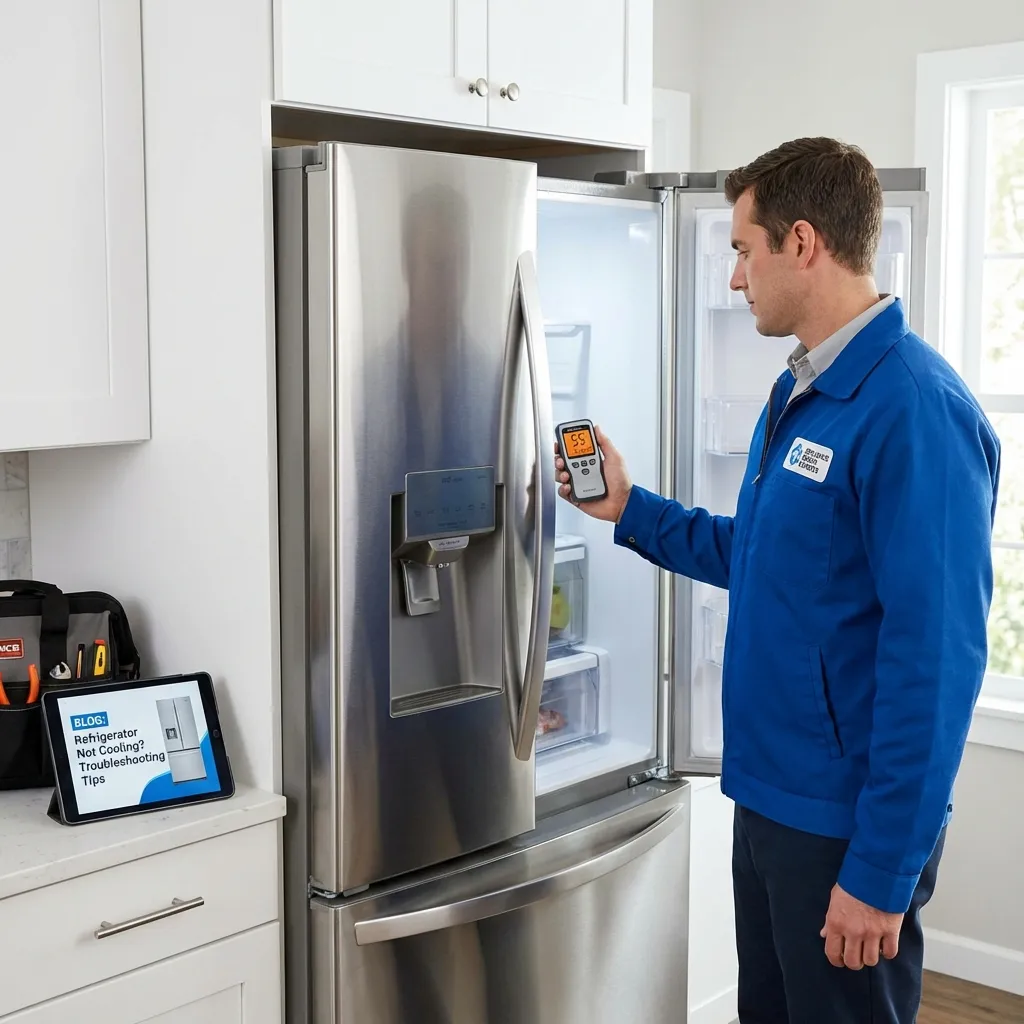
There are few household inconveniences as stressful as opening your refrigerator only to find warm air and spoiling groceries. If your fridge is not cooling the way it should, you are not alone. This is one of the most common appliance problems Toronto homeowners face, and it can range from a simple fix you handle yourself to a issue that requires a trained technician.
In this guide, we walk through every major reason your refrigerator might not be cooling properly, how to diagnose each one, and what steps to take next. Whether you live in a downtown Toronto condo or a suburban home in Mississauga or Brampton, this information will help you protect your food and avoid an unnecessary replacement.
Quick Answer: If your fridge is not cooling, the most likely culprits are dirty condenser coils, a faulty evaporator fan motor, a malfunctioning compressor, a broken thermostat, damaged door seals, a refrigerant leak, or a failed defrost system. Start by checking your temperature settings and cleaning the coils. If the basics do not resolve it, the problem likely requires professional diagnosis.
Understanding How Your Refrigerator Cools
Before diving into what goes wrong, it helps to understand how your refrigerator actually works. A fridge does not "make cold air" -- it removes heat from inside the cabinet and releases it outside. This heat removal cycle depends on several components working together:
- Compressor -- pressurizes the refrigerant and pumps it through the system
- Condenser coils -- release heat from the refrigerant to the outside air
- Evaporator coils -- absorb heat from inside the fridge
- Evaporator fan -- circulates air over the evaporator coils and through the fridge compartment
- Thermostat / temperature controls -- monitor temperature and signal the compressor to run
- Refrigerant -- the chemical that absorbs and releases heat as it cycles through the system
When any one of these components fails or underperforms, your refrigerator stops cooling effectively. Let us look at each common failure in detail.
1. Dirty Condenser Coils
What They Do
Condenser coils are located either on the back of the fridge or underneath it behind a kickplate. They are responsible for releasing the heat that the refrigerant has absorbed from inside your refrigerator. When they are clean, heat dissipates efficiently and the cooling cycle works as designed.
Why They Cause Cooling Problems
Over time, condenser coils accumulate dust, pet hair, grease, and other debris. This layer of grime acts as insulation, trapping heat against the coils. The compressor then has to work harder and longer to cool the fridge, and eventually it may not be able to keep up at all. In many Toronto homes, especially older houses near High Park or along the Danforth where pet ownership is common, we see coil buildup as the number one preventable cause of cooling failure.
How to Fix It
Unplug your refrigerator and locate the condenser coils. If they are on the back, pull the fridge away from the wall carefully. If they are underneath, remove the kickplate at the bottom front. Use a coil cleaning brush (available at any hardware store for under ten dollars) and a vacuum with a brush attachment to gently remove the buildup. You should clean your coils at least twice a year -- once in the spring and once in the fall.
This is the single easiest maintenance task that prevents a large percentage of fridge cooling problems. If you have never cleaned your coils and your fridge is a few years old, this should be your first step.
2. Faulty Evaporator Fan Motor
What It Does
The evaporator fan sits inside the freezer compartment, usually behind the rear panel. It blows cold air from the evaporator coils into the freezer and then through the damper into the fresh food compartment. Without this fan running, cold air stays trapped near the coils and never reaches your food.
Symptoms of a Bad Evaporator Fan
- The freezer is cold but the fridge section is warm
- You hear a humming or buzzing sound from the freezer that stops and starts
- There is no airflow coming from the freezer vents into the fridge
- The fridge runs constantly without reaching the set temperature
How to Diagnose It
Open your freezer door and listen. You should hear a steady fan sound. If you hear nothing, or a grinding and squealing noise, the fan motor may be failing. Unplug the fridge, remove the rear panel inside the freezer, and inspect the fan blade. If the blade is obstructed by ice buildup, you may just need to defrost the unit. If the blade spins freely when you push it but the motor does not run on its own, the motor needs replacement.
On Samsung and LG refrigerators, which are very popular in the GTA, evaporator fan failures are among the most common issues we encounter. These fans typically run on low-voltage DC power and can fail gradually, leading to intermittent cooling before they stop completely.
3. Compressor Problems
The Heart of Your Refrigerator
The compressor is the most critical and expensive component in your refrigerator. It pumps refrigerant through the sealed system and creates the pressure differential that makes cooling possible. When the compressor fails, your fridge will not cool at all.
Signs of a Failing Compressor
- The fridge is completely warm in both compartments
- You hear a click followed by a humming sound that repeats every few minutes (this is the compressor trying to start and failing)
- The compressor is hot to the touch but the fridge is not cooling
- The condenser fan runs but the compressor does not
When It Is Not the Compressor
Before assuming the compressor is dead, check the start relay and overload protector. These small, inexpensive parts sit on the side of the compressor and help it start up. They fail more often than the compressor itself, and they cost a fraction of the price to replace. A technician can test these components with a multimeter in minutes.
If the compressor itself has failed, you are looking at a significant repair. On refrigerators under five years old, it may be worth fixing, especially for higher-end models. For older units, replacement is often more economical. At Appliance Service Plus, we always provide an honest assessment of whether a compressor repair makes financial sense for your specific situation.
4. Thermostat and Temperature Control Issues
How the Thermostat Works
The thermostat (or temperature control board in newer models) monitors the internal temperature and tells the compressor when to run and when to stop. If it is reading incorrectly or has failed, the compressor may not run enough, or at all.
Symptoms
- The fridge runs all the time but never gets cold enough
- The compressor never turns on
- Temperature settings seem to have no effect
- The display temperature does not match the actual temperature inside
What to Check
First, make sure the temperature is set correctly. The FDA recommends keeping your fridge at 37 to 40 degrees Fahrenheit (3 to 4 degrees Celsius) and your freezer at 0 degrees Fahrenheit (-18 degrees Celsius). If the settings are correct but the temperature is off, try adjusting the dial or digital settings and wait 24 hours for the fridge to stabilize.
On modern refrigerators with digital displays, the temperature control board or main control board could be the culprit. These electronic components can fail due to power surges, which are not uncommon in parts of the GTA during summer thunderstorms. If you suspect a control board issue, this is a repair best left to a professional.
5. Door Seal (Gasket) Problems
Why Seals Matter
The rubber gasket around your refrigerator and freezer doors creates an airtight seal that keeps warm, humid air out. When this seal is compromised, your fridge loses cold air constantly, the compressor works overtime, and the interior temperature rises.
How to Test Your Door Seal
Close the door on a dollar bill or piece of paper so that half is inside and half is outside. Pull the bill out slowly. You should feel resistance. Repeat this all the way around the door. If the bill slips out easily in any spot, the seal is not making proper contact there.
Common Causes of Seal Failure
- Wear and tear from years of use (rubber dries out and loses flexibility)
- Tearing from catching the seal when loading groceries
- Mold and mildew buildup that prevents a flush seal
- The fridge is not level, causing the door to sit slightly open
How to Fix It
Start by cleaning the gasket thoroughly with warm soapy water and a cloth. Dry it completely. If the seal is torn, warped, or permanently compressed, it needs to be replaced. Replacement gaskets are relatively affordable and many homeowners can handle the swap themselves. Just make sure you order the correct part for your specific model number.
In our experience serving homes across Mississauga and Brampton, door seal issues are especially common in households with children who may not always close the fridge fully, or in kitchens where the fridge is located near a heat source like a stove or direct sunlight.
6. Refrigerant Leaks
Understanding Refrigerant
Refrigerant is the chemical fluid that circulates through the sealed system, absorbing heat inside the fridge and releasing it outside. Your refrigerator has a fixed charge of refrigerant sealed at the factory. It does not consume refrigerant -- if the level is low, there is a leak somewhere.
Signs of a Refrigerant Leak
- The compressor runs continuously but the fridge never cools properly
- The evaporator coils only have frost on one small section instead of evenly
- You hear a hissing or bubbling sound near the compressor
- The condenser coils are clean but the fridge still does not cool
Why This Is a Professional Repair
Refrigerant leaks require specialized equipment to locate, repair, and recharge the system. Handling refrigerant also requires EPA certification (or the Canadian equivalent under environmental regulations). This is not a DIY repair. A technician will use electronic leak detectors, nitrogen pressure testing, or UV dye to find the leak, repair it, and recharge the system with the correct amount and type of refrigerant.
If your refrigerator is more than eight to ten years old and has a refrigerant leak, it is usually more cost-effective to replace the unit rather than repair the sealed system.
7. Defrost System Failures
How the Defrost System Works
Every frost-free refrigerator has an automatic defrost system that includes a defrost heater, a defrost thermostat (also called a bi-metal), and a defrost control board or timer. This system melts frost off the evaporator coils every 8 to 12 hours so that airflow is not blocked. When the defrost system fails, ice builds up on the coils until it completely blocks the air passages.
Symptoms of a Defrost Failure
- The freezer temperature is normal but the fridge section is warm
- There is a thick layer of frost or ice on the back wall of the freezer
- You hear a "ticking" or "popping" sound from the defrost timer
- The fridge works fine for a few days after manually defrosting, then warms up again
The Manual Defrost Test
Unplug your refrigerator, remove all food from the freezer, take off the rear panel, and use a hair dryer to melt all the ice off the evaporator coils. Do not use sharp objects to chip the ice, as you can puncture the coils. Once the coils are completely clear, plug the fridge back in. If it cools normally for a few days and then starts warming up again, you have confirmed a defrost system failure.
Defrost heater and defrost thermostat failures are extremely common on Whirlpool, Samsung, and KitchenAid refrigerators. The parts themselves are not expensive, but accessing them requires disassembling the freezer interior, which some homeowners prefer to leave to a technician.
Quick Troubleshooting Checklist
Before calling for service, work through this checklist. It covers the most common and easiest-to-fix causes of a fridge not cooling:
- Check the temperature settings -- Make sure the fridge is set between 37 and 40 degrees F and the freezer at 0 degrees F. Give it 24 hours to stabilize after any adjustment.
- Ensure the fridge is plugged in and receiving power -- Check the outlet and the circuit breaker. Make sure the plug is fully inserted.
- Clean the condenser coils -- Unplug the fridge and clean the coils with a brush and vacuum. This alone fixes a surprising number of cooling issues.
- Check for proper airflow inside the fridge -- Do not overload the shelves or block the vents between the freezer and fridge compartments. Cold air needs to circulate freely.
- Inspect the door seals -- Use the dollar bill test described above. Clean or replace damaged gaskets.
- Make sure the fridge is level -- Use a bubble level on top of the fridge. If it is tilted, the doors may not close properly and the compressor may not function correctly.
- Listen to the fridge -- You should hear the compressor hum, the evaporator fan run inside the freezer, and the condenser fan run near the compressor. Silence or unusual noises point to specific component failures.
- Check for ice buildup -- If there is visible frost on the freezer back wall, you may have a defrost system problem.
- Feel the compressor -- It should be warm but not painfully hot. If it is cold and silent, it may not be starting. If it is extremely hot, it may be overheating.
- Verify clearance around the fridge -- There should be at least an inch of space on the sides and back for proper air circulation, especially for built-in installations common in Toronto condo kitchens.
If you have gone through this entire checklist and your refrigerator is still not cooling, it is time to call a professional.
When to Call a Professional for Fridge Repair
Some refrigerator problems are straightforward to diagnose and fix on your own. Others require specialized tools, technical knowledge, and access to OEM parts. Here is a simple guideline:
Safe to DIY:
- Cleaning condenser coils
- Replacing a door gasket
- Adjusting temperature settings
- Clearing blocked vents
- Manually defrosting the freezer
Call a professional:
- Compressor or start relay issues
- Refrigerant leaks
- Defrost system component replacement
- Electronic control board failures
- Evaporator fan motor replacement (especially on models where the freezer must be partially disassembled)
At Appliance Service Plus, our technicians serve the entire Greater Toronto Area including Toronto, Mississauga, Brampton, Vaughan, Scarborough, and surrounding communities. We stock common replacement parts for Samsung, LG, Whirlpool, KitchenAid, Maytag, GE, and most other major brands in our service vehicles, which means many repairs are completed in a single visit.
Preventing Future Cooling Problems
A little regular maintenance goes a long way toward preventing refrigerator cooling failures:
- Clean condenser coils twice a year -- spring and fall is an easy schedule to remember
- Replace water filters on schedule -- clogged filters can cause ice buildup and airflow issues in fridge models with water and ice dispensers
- Keep the fridge about three-quarters full -- food acts as thermal mass and helps maintain temperature, but overloading blocks airflow
- Check door seals annually -- catch small issues before they cause major cooling loss
- Ensure proper clearance -- maintain at least one inch of space on all sides for ventilation
- Avoid placing hot food directly in the fridge -- let it cool to room temperature first to avoid making the compressor work overtime
Taking these steps can add years to the life of your refrigerator and help you avoid the stress and expense of an unexpected breakdown.
Frequently Asked Questions
Why is my freezer cold but my fridge is warm?
This is one of the most common fridge cooling complaints, and it usually points to one of three causes: a failed evaporator fan motor, a defrost system problem causing ice to block the air passages between the freezer and fridge compartments, or a malfunctioning damper control that is not opening to let cold air flow from the freezer into the fridge. Start by checking for frost buildup on the freezer back wall, which would indicate a defrost issue. If the back wall is clear, listen for the evaporator fan running when the freezer door is closed (press the door switch with your finger). If the fan is silent, it likely needs replacement.
How long should a refrigerator last before needing replacement?
Most modern refrigerators last between 10 and 18 years depending on the brand, model, and how well they have been maintained. Top-freezer models tend to be the most durable, while refrigerators with complex features like French doors, through-the-door ice makers, and smart connectivity tend to have more component failures over time. As a general rule, if your fridge is under eight years old and the repair cost is less than half the price of a comparable new unit, repair is usually the better choice. For fridges over 12 years old with a major failure like a bad compressor, replacement is often more practical.
Can a dirty fridge not cooling issue be fixed without replacing parts?
Yes, in many cases. Dirty condenser coils are the leading cause of fixable cooling problems that do not require any replacement parts. Simply cleaning the coils, ensuring proper clearance around the fridge, and confirming correct temperature settings can restore full cooling performance. Ice buildup from a temporarily stuck defrost timer can also sometimes be resolved by a manual defrost without replacing any components, though the underlying cause should still be investigated to prevent recurrence.
How much does refrigerator repair cost in Toronto?
Refrigerator repair costs in the Toronto area vary depending on the problem and the parts required. A straightforward repair like replacing a start relay or a defrost thermostat typically ranges from $150 to $300 including parts and labor. More involved repairs like evaporator fan replacement or control board work can range from $250 to $500. Compressor replacement or sealed system repairs are the most expensive, often running between $500 and $900. At Appliance Service Plus, we provide upfront pricing before any work begins, so there are no surprises on your final bill. We also offer a warranty on both parts and labor for your peace of mind.
Is it worth repairing a fridge that is not cooling, or should I replace it?
This depends on three factors: the age of the refrigerator, the cost of the repair, and the overall condition of the unit. If your fridge is less than eight years old and the repair is something like a fan motor, thermostat, or defrost component, repairing it almost always makes more financial sense than replacing the entire unit. If the fridge is over 12 years old and needs a compressor or sealed system repair, the cost of repair combined with the likelihood of additional failures in the near future usually tips the balance toward replacement. A qualified technician can help you make the right call based on the specific diagnosis.
If your refrigerator is not cooling and you have worked through the troubleshooting steps above without success, do not wait until your food spoils. Contact a qualified appliance repair technician who can diagnose the problem accurately and get your fridge back to proper working order quickly. For homeowners across Toronto, Mississauga, Brampton, and the surrounding GTA, professional help is just a phone call away.
Need Professional Help?
If the problem persists or seems too complex to handle on your own, our expert technicians are ready to help. Fast, reliable service when you need it.