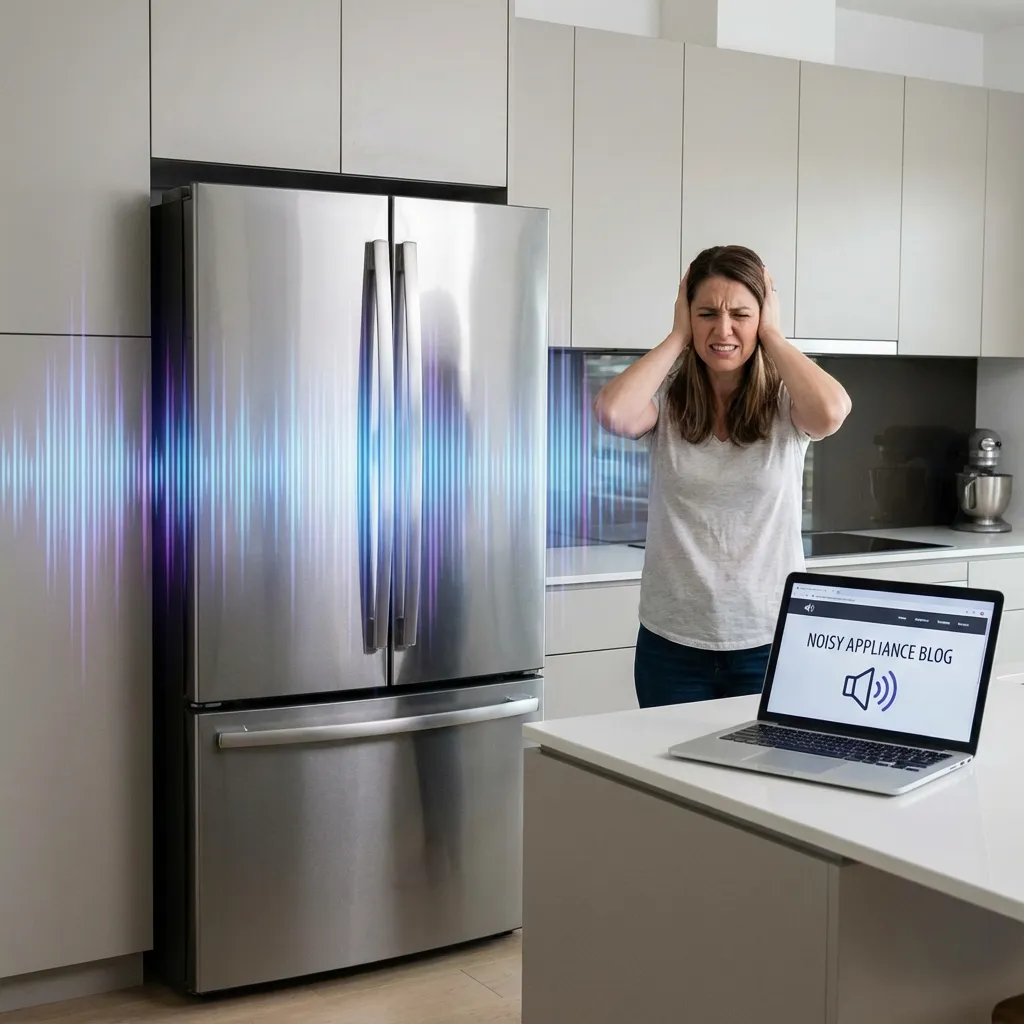
A refrigerator makes sounds as part of normal operation — the hum of the compressor, the rush of refrigerant, the click of the defrost timer. But when your fridge starts making new, loud, or unusual noises, it is usually telling you something needs attention.
This guide helps you identify every common refrigerator noise, determine whether it is normal or a sign of trouble, and provides step-by-step instructions for the fixes you can handle.
Quick Answer: If your refrigerator is making an unusual noise, the most common causes are dirty condenser coils (buzzing or humming), a failing evaporator fan motor (rattling or squealing), ice buildup around the fan (intermittent grinding), or a worn compressor (loud humming or clicking). Start by cleaning the condenser coils and checking that the fridge is level. If the noise persists, identify its location and type to narrow down the cause.
What Each Refrigerator Noise Means
Buzzing or Humming
A low buzzing or humming sound is normal — it is the compressor running. However, if the buzzing becomes noticeably louder than usual, or if it is accompanied by vibration, the condenser coils may be dirty, the compressor may be working harder than it should, or the fridge may not be level.
If the buzzing is loud enough to hear from across the kitchen, clean the condenser coils and check that the refrigerator is sitting level on the floor. If the noise persists after cleaning, the compressor may be failing.
Clicking
A single click when the compressor starts or stops is normal — it is the start relay engaging. Rapid clicking or continuous clicking, however, usually indicates a failed start relay or a compressor that is struggling to start. If you hear rapid clicking every few minutes, the compressor is trying to start but failing, which will eventually cause the start relay to burn out.
Rattling or Vibrating
A rattling or vibrating noise often comes from loose components. The most common causes are a refrigerator that is not level, items stored on top of the fridge vibrating against the surface, or the condenser fan blade striking debris. A vibrating water line can also produce a rattling sound.
Check that the fridge is level using a bubble level. Tighten any loose screws on the back panel. Remove items from the top of the fridge. If the rattling persists, inspect the condenser fan for debris.
Squealing or Screeching
A high-pitched squeal or screech coming from inside the freezer compartment usually indicates a failing evaporator fan motor. The evaporator fan circulates cold air from the freezer into the refrigerator, and when its bearings wear out, the motor produces a loud, unpleasant noise.
This sound typically gets louder when you open the freezer door (because the fan speeds up to compensate for the warm air) and may stop when the door is open (because the fan shuts off when the door switch is activated).
Grinding or Gurgling
A grinding noise from inside the freezer often means ice has built up around the evaporator fan blade. The fan blade strikes the ice, producing a grinding or scraping sound. This is common in refrigerators with a defrost system failure — the defrost heater is not working, so ice accumulates on the evaporator coil and eventually reaches the fan.
Gurgling or hissing sounds after the compressor stops are normal — they are the sound of refrigerant flowing through the system. If the gurgling is constant or very loud, it may indicate a refrigerant leak, which requires professional repair.
Knocking or Popping
A knocking or popping sound when the compressor starts or stops is often caused by the refrigerator not being level, which puts stress on the compressor mounts. Leveling the fridge usually eliminates this noise.
Popping sounds during the defrost cycle are also normal on many models — they are caused by the defrost heater rapidly expanding metal components as they heat up.
Pulsing or Thumping
A rhythmic pulsing or thumping noise can come from the condenser fan blade if it is striking debris, or from a refrigerant line vibrating against the cabinet. Check the condenser fan for debris and ensure that no lines are touching the back panel.
Step-by-Step: How to Diagnose and Fix Refrigerator Noises
Step 1: Identify the Noise Location
Open the refrigerator and freezer doors and listen carefully. Determine whether the noise is coming from the back of the fridge (compressor area), the inside of the freezer (evaporator fan), the bottom front (condenser fan), or the water line area.
Step 2: Clean the Condenser Coils
Dirty condenser coils force the compressor to work harder, which increases noise and reduces efficiency. Unplug the refrigerator and locate the coils — they are either on the back of the fridge or underneath the front kickplate. Use a coil cleaning brush or a vacuum with a brush attachment to remove dust and pet hair. Clean coils reduce compressor noise and improve cooling performance.
Step 3: Level the Refrigerator
Place a bubble level on top of the refrigerator, front to back and side to side. Adjust the leveling feet at the front of the fridge until it is perfectly level. A refrigerator that is not level puts stress on the compressor mounts, causes vibration, and can produce knocking or rattling sounds. Most manufacturers also recommend tilting the fridge slightly backward (about 1/4 inch) so the doors close automatically.
Step 4: Check for Ice Buildup
If the noise is a grinding or scraping sound from inside the freezer, unplug the refrigerator and open the freezer. Remove the rear panel inside the freezer to access the evaporator coil and fan. If you see ice built up around the fan blade, carefully remove the ice by hand (with the fridge unplugged) or use a hair dryer on a low setting to melt it. Clear any frost from the evaporator coil.
Step 5: Inspect the Evaporator Fan
With the rear freezer panel removed, check the evaporator fan blade for cracks or damage. Spin the blade by hand — it should rotate freely and quietly. If the blade wobbles, scrapes, or the motor is noisy when powered, the fan motor needs replacement. Evaporator fan motors are one of the most frequently replaced refrigerator components.
Step 6: Inspect the Condenser Fan
The condenser fan is located next to the compressor at the back or bottom of the fridge. Unplug the refrigerator and remove the lower back panel. Check the fan blade for debris — papers, pet hair, and food wrappers can get drawn into the fan and cause rattling or vibrating noises. Spin the blade by hand. If it does not turn freely or makes noise, the condenser fan motor needs replacement.
Step 7: Tighten Loose Components
Check all accessible screws and bolts on the back panel, kickplate, and compressor cover. Tighten anything that is loose. Ensure that no refrigerant lines or electrical wires are touching vibrating surfaces. A small piece of foam insulation between a vibrating line and the cabinet can eliminate annoying rattles.
When to Call a Professional
Some refrigerator noises indicate problems that require professional diagnosis and repair. Call a technician if you notice any of the following:
- Loud, continuous compressor humming that persists after cleaning coils — this may indicate a failing compressor, which is an expensive repair.
- Rapid clicking — the start relay or compressor is failing and will eventually stop working entirely.
- Hissing or bubbling that does not stop — may indicate a refrigerant leak, which requires specialized equipment to repair.
- The refrigerator is not cooling properly in addition to making noise — the two symptoms together often point to a compressor or sealed system failure.
Appliance Service Plus has been diagnosing and repairing noisy refrigerators for Toronto homeowners for years. Their technicians carry fans, relays, and other common replacement parts for Samsung, LG, Whirlpool, GE, and other major brands.
Frequently Asked Questions
Is it normal for a refrigerator to make noise?
Yes. Normal refrigerator sounds include a low hum (compressor running), clicking (start relay engaging), gurgling (refrigerant flowing), and occasional popping (defrost heater expanding). Any new, loud, or persistent noise that does not match these normal sounds warrants investigation.
Why is my refrigerator suddenly loud?
A sudden increase in noise level most commonly means the condenser coils are dirty, forcing the compressor to work harder. Clean the coils and check that the fridge is level. If the noise persists, the compressor, fan motor, or another component may be failing.
How much does it cost to fix a noisy refrigerator in Toronto?
Common noise repairs range from $150 to $350 in the Toronto area. Evaporator fan motor replacement typically costs $200 to $300. Condenser fan motor replacement costs $175 to $250. Start relay replacement is $100 to $175. Compressor replacement — the most expensive repair — costs $500 to $800 or more, and may not be worth it on older refrigerators.
Why does my fridge make a loud noise when the door closes?
This is often caused by the sudden change in air pressure when the door shuts, which can make the evaporator fan blade wobble or the cabinet vibrate. If the noise is brief and stops within a second, it is usually normal. If it persists, check that the fridge is level and that nothing inside is vibrating against the walls.
Can a noisy refrigerator be dangerous?
Most refrigerator noises are not dangerous, but a compressor that is failing can overheat, and a refrigerant leak can be harmful if it occurs in a poorly ventilated space. If your refrigerator is making an extremely loud noise, not cooling properly, or you smell a chemical odour, unplug it and call a technician.
Need Professional Help?
If the problem persists or seems too complex to handle on your own, our expert technicians are ready to help. Fast, reliable service when you need it.